
Upper LimbPeer-Reviewed Clinical Reference

Rotator Cuff Dynamics & Scapular Dyskinesis

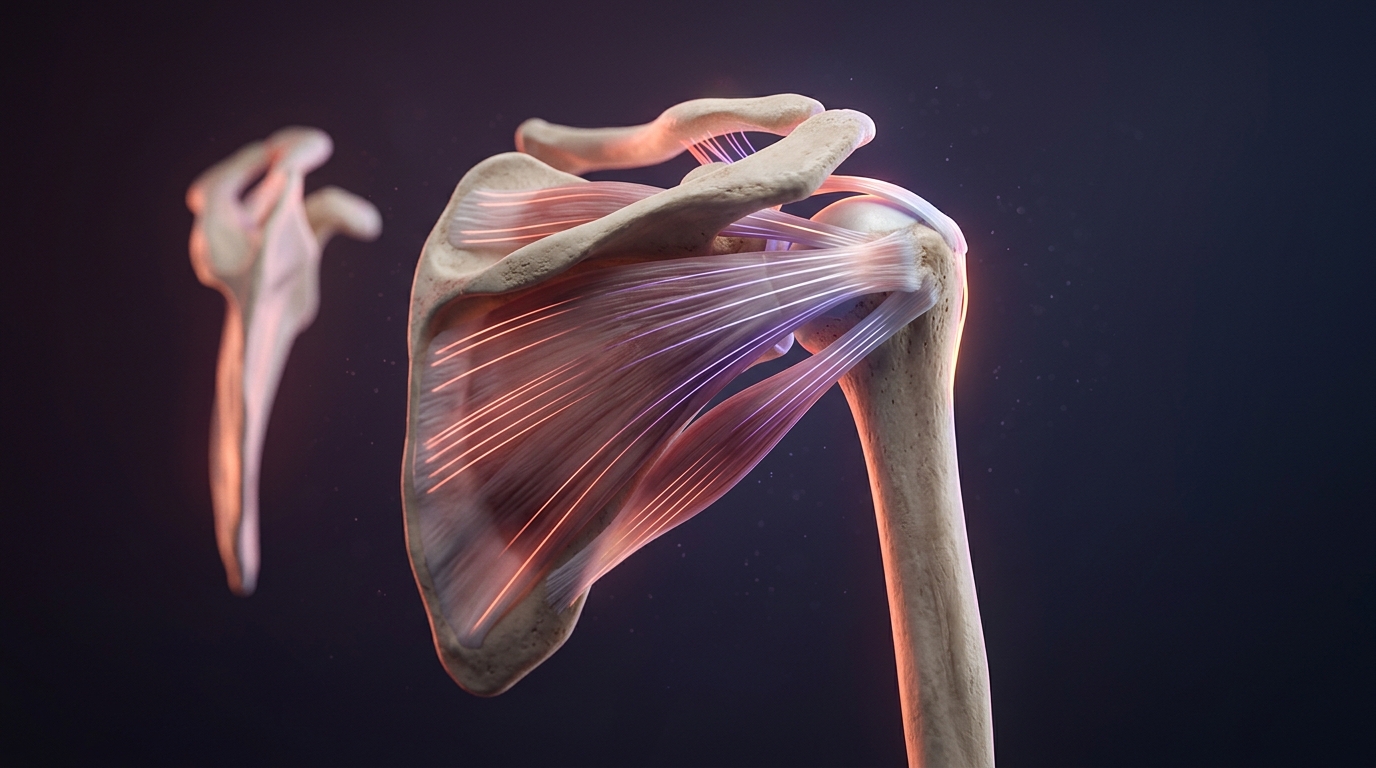
Identify the four rotator cuff muscles and their bony landmarks, then reveal selected scapular and superficial muscles.

ReviewerPhysioLove · AI-assisted educational content
Last VerifiedIndependent clinical review pending
Outcomes4 Objectives
Anatomy Tools2 Connected
Clinical Foundation

Pathology & Clinical Biomechanics

Shoulder movement combines glenohumeral and shoulder-girdle motion. Cuff and scapular muscles contribute to control, but symptoms and functional limitations require a broader assessment. Exercise choices should reflect goals and individual response.
Learning Outcomes

Core Educational Objectives

  • Identify all four rotator cuff muscles and their actions.
  • Compare anterior and posterior shoulder anatomy.
  • Describe selected scapular muscle attachments.
  • Distinguish movement observations from a tissue diagnosis.