
Spine & PosturePeer-Reviewed Clinical Reference

Spinal Segmental Biomechanics & Kinematics

Compare cervical and lumbar vertebrae, discs and neural relations through five labeled model-derived views.

ReviewerPhysioLove · AI-assisted educational content
Last VerifiedIndependent clinical review pending
Outcomes4 Objectives
Anatomy Tools3 Connected
Clinical Foundation

Pathology & Clinical Biomechanics

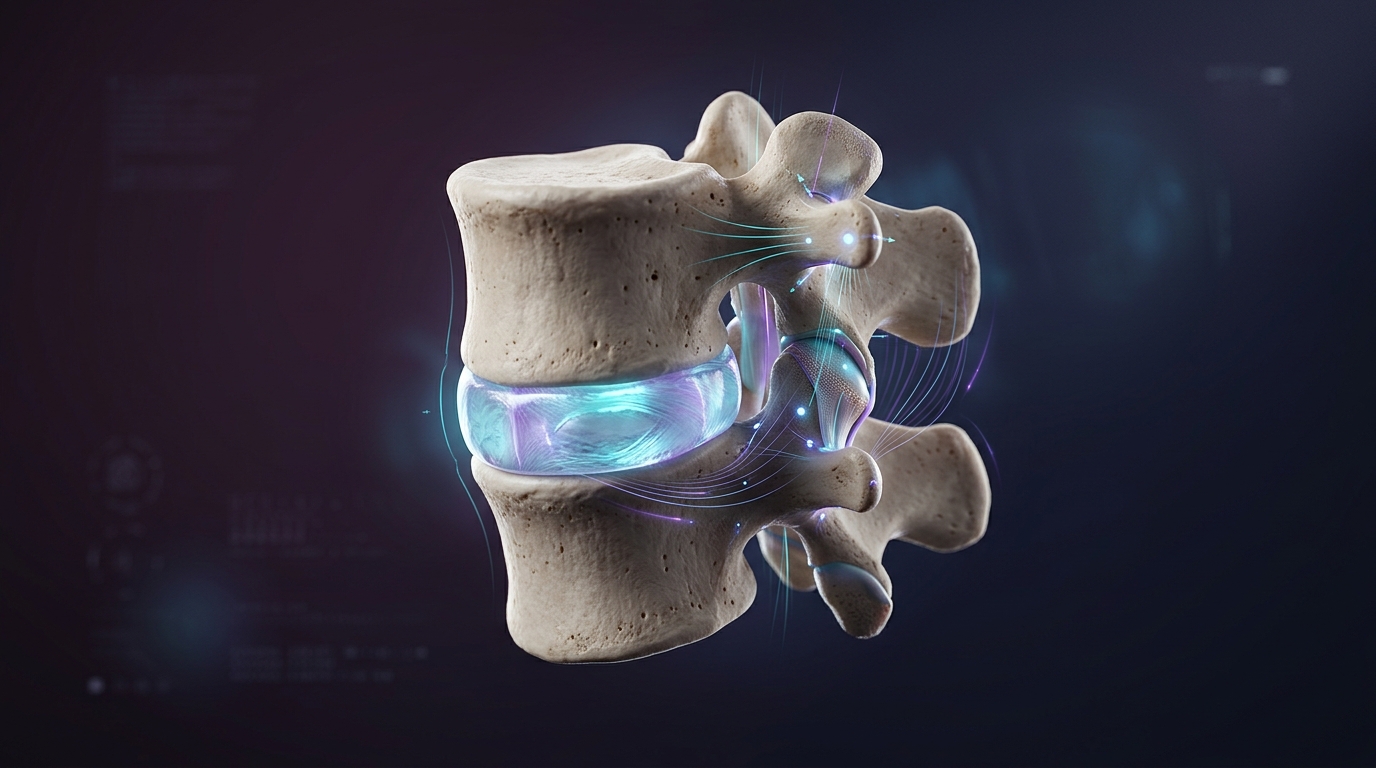
Use paired 2D and 3D views to relate vertebrae, discs and neural tissues. Compare regions before reasoning about movement. The atlas cannot establish a pain generator, muscle activation pattern or individual loading tolerance.
Learning Outcomes

Core Educational Objectives

  • Identify the atlas, axis and lower cervical vertebrae.
  • Describe the components of a lumbar motion segment.
  • Distinguish whole-disc source geometry from the nucleus teaching overlay.
  • Locate the cauda equina and distinguish radicular pain from radiculopathy.