
Functional Biomechanics of the Spine & Posture
Compare cervical and lumbar vertebrae, discs and neural relations through five labeled model-derived views.
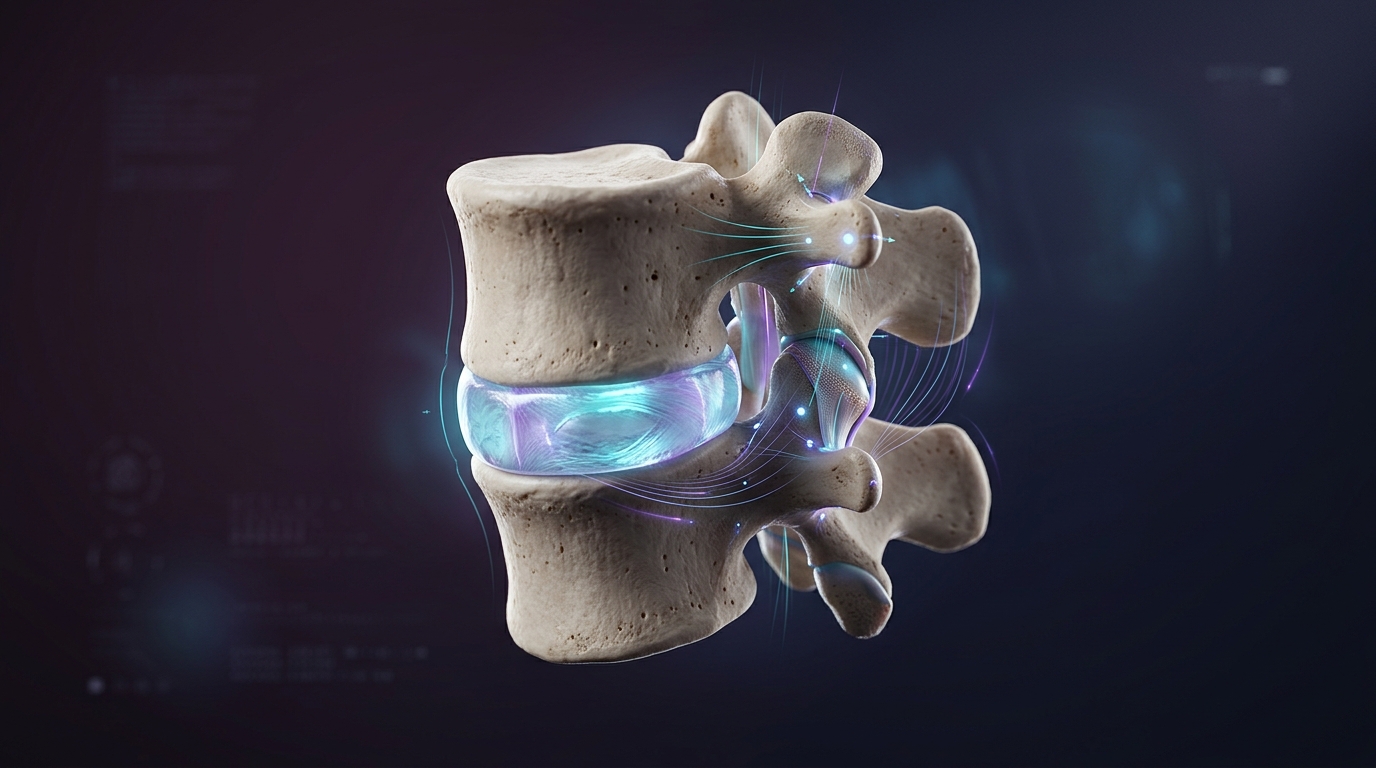
Course Syllabus
2 sequential modules covering 4 practical lessons. Select any lesson to enter classroom mode.
Module 1: Segmental Spinal Anatomy & Kinematics
- 01Spinal Motion Segments & Regional Differences
Compare cervical and lumbar anatomy, facet joints and the three-joint motion segment.
- 02Intervertebral Discs: Structure & Load Distribution
Distinguish the whole disc, annulus, nucleus and endplate interfaces.
Module 2: Stabilization & Clinical Pathology
- 01Deep Spinal Muscles & Segmental Control
Separate anatomical attachments from assumptions about muscle activation.
- 02Radicular Pain, Radiculopathy & Referred Pain
Use precise terms and relate neurological findings to anatomy.
What You Will Achieve
- Identify the atlas, axis and lower cervical vertebrae.
- Describe the components of a lumbar motion segment.
- Distinguish whole-disc source geometry from the nucleus teaching overlay.
- Locate the cauda equina and distinguish radicular pain from radiculopathy.
Prerequisites & Target Audience
- Basic anatomical terminology and body planes.
- These materials support study; they do not replace supervised clinical assessment.
Connected Anatomy Tools
Interactive 2D radiological atlases and 3D biomechanical models directly referenced in this curriculum.
Cervical & Lumbar Anatomy Atlas
Compare cervical and lumbar vertebrae, discs and neural relations through five labeled model-derived views.
Cervical Spine: Atlas, Axis & Motion Segments
A separate cervical assembly preserves the different shape of C1, the dens of C2, and the lower cervical vertebrae. Compare this model with the lumbar spine using the linked atlas.
Lumbar Spine, Discs & Deep Stabilizers
Explore five lumbar vertebrae, the sacrum, intervertebral discs, cauda equina and deep posterior muscles. Bone and disc surfaces come from BodyParts3D; multifidus and the disc nucleus are teaching overlays. Hide bone to inspect internal anatomy.