Motor Control Pathways & Stroke Neurorehabilitation
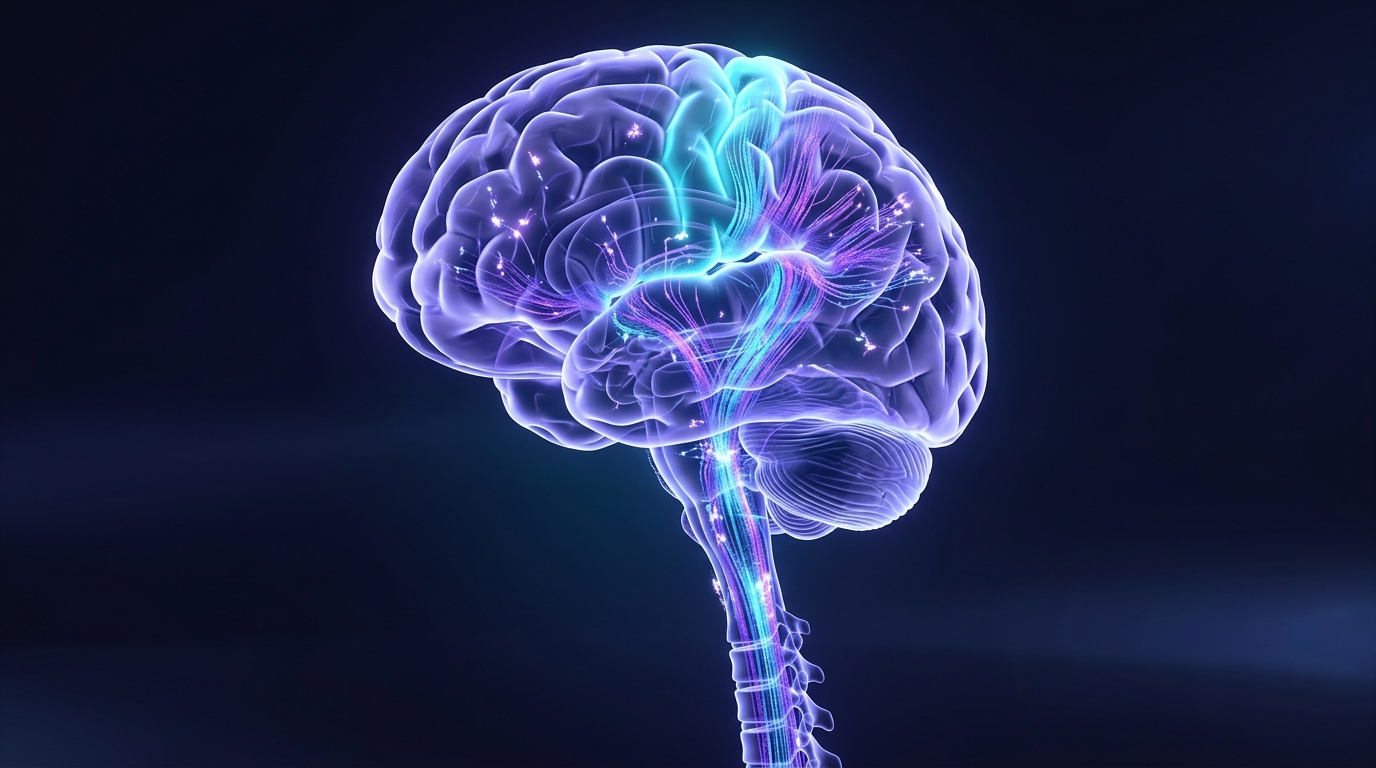
Trace bilateral corticospinal teaching pathways and compare them with cortical, capsular and brainstem source structures.
Course Syllabus
2 sequential modules covering 4 practical lessons. Select any lesson to enter classroom mode.
Module 1: Descending Motor Systems & Tract Anatomy
- 01Corticospinal Pathway & Pyramidal Crossing
Trace the pathway and reason about lesion side with clear model limitations.
- 02Motor Pathways, Tone & Spasticity
Separate weakness, spasticity and mechanical stiffness after neurological injury.
Module 2: Evidence-Based Stroke Recovery Protocols
- 01Task Practice, Goals & Motor Learning
Connect stroke rehabilitation practice with meaningful activities and reassessment.
- 02Walking After Stroke: Observation & Hypotheses
Connect gait observations with a broad motor and sensory assessment.
What You Will Achieve
- Trace the main corticospinal sequence from cortex to cord.
- Identify the major crossing in the caudal medulla.
- Distinguish source neural meshes from authored tract curves.
- Connect anatomy to task practice without predicting individual recovery.
Prerequisites & Target Audience
- Basic anatomical terminology and body planes.
- These materials support study; they do not replace supervised clinical assessment.
Connected Anatomy Tools
Interactive 2D radiological atlases and 3D biomechanical models directly referenced in this curriculum.
Motor Pathways & Brainstem Anatomy Atlas
Trace bilateral corticospinal teaching pathways and compare them with cortical, capsular and brainstem source structures.
Motor Pathways: Cortex to Cervical Cord
BodyParts3D cortical, capsular and brainstem structures with an authored bilateral corticospinal pathway overlay. The trajectories illustrate the sequence and crossing; they are not diffusion tractography, a complete connectome, or a prediction of stroke recovery.